


A basement that smells musty even after cleaning deserves a closer look. The odor may come from damp stored items, lingering moisture, or hidden mold. Smell alone cannot identify the cause, and covering it with fragrance rarely answers the important question: what is keeping the space damp?
For homeowners in Plainfield and nearby Chicagoland communities, a useful starting point is to track when the smell appears, check accessible areas, and know when to ask for a professional inspection.
Why does my basement smell musty?
Think about the pattern before reaching for another cleaner. Does the odor arrive after rain, linger around stored boxes, or concentrate near a utility room? These clues help narrow the search.
Moisture entering the building: Look for staining or dampness near foundation walls, windows, and plumbing.
Condensation: Cool pipes and surfaces can collect moisture when indoor air is humid.
Damp belongings: Cardboard, rugs, and upholstered furniture may retain odors after getting wet.
Concealed mold: A persistent moldy odor can warrant investigation even when the room looks clean.
A musty smell is a clue to investigate, not proof that every basement needs mold testing or remediation.
A simple basement moisture checklist
Start with areas you can see and reach safely. Record what you notice so you can explain the concern clearly if you request service.
Map the odor. Note where it is strongest and whether it changes after rain, laundry, or use of a nearby fixture.
Check visible surfaces. Look for new stains, peeling finishes, warped trim, or damp flooring. Photograph changes without disturbing the material.
Review stored items. Check accessible boxes and furnishings for dampness. Keep belongings away from wet areas.
Measure humidity. A small humidity monitor can help you track conditions over time rather than relying on how the room feels.
Review past leaks. Note previous seepage, plumbing trouble, or wet carpet—even if the surface now looks dry.
Do not cut into walls, pull up flooring, or disturb suspected mold to investigate it yourself. Hidden areas may need professional assessment.
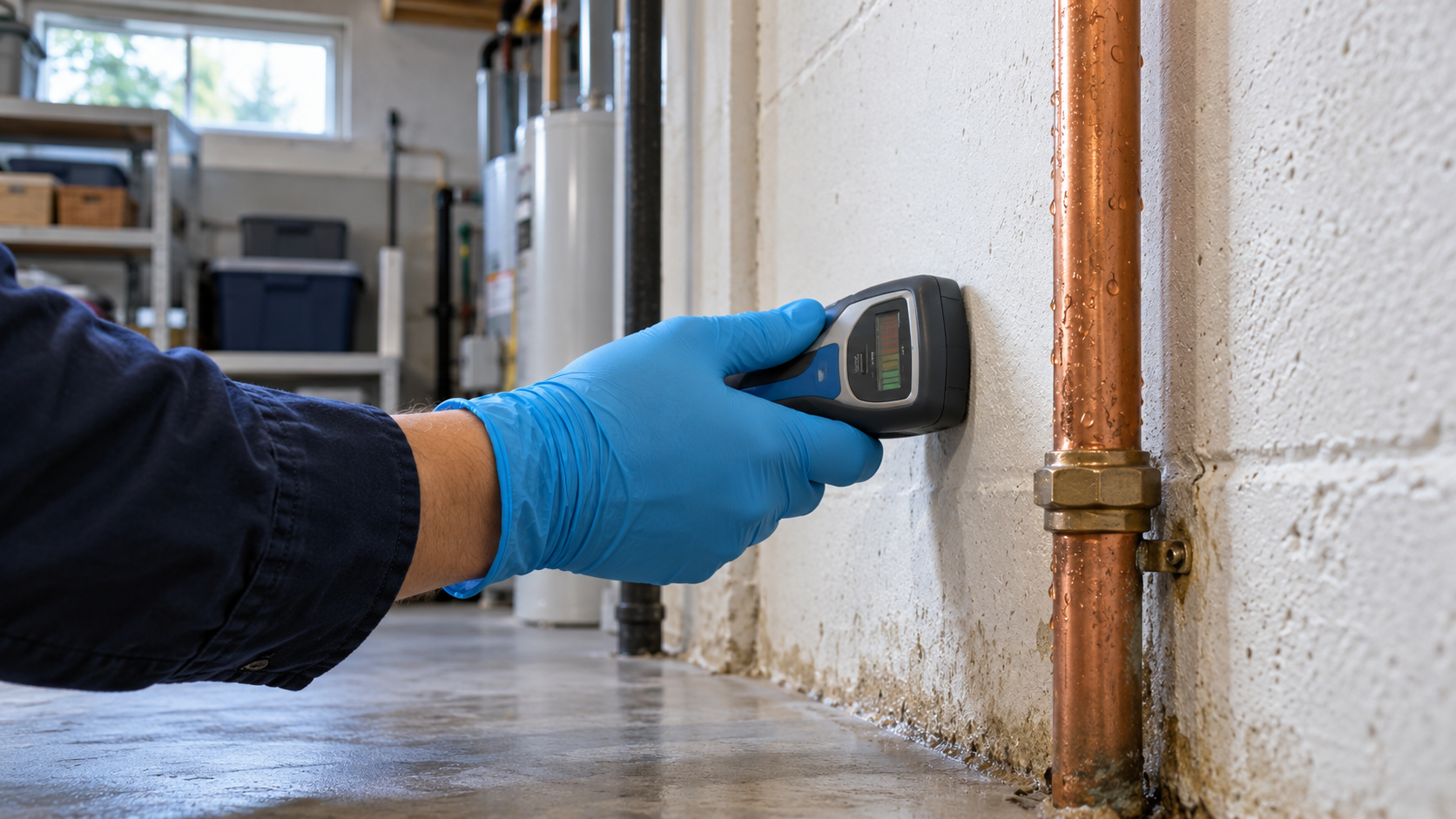
What you can do now—and when to call
Address accessible leaks promptly and keep track of whether the odor returns. EPA recommends keeping indoor relative humidity below 60%, ideally between 30% and 50%. A dehumidifier can help manage humidity, but it does not repair a leak or remove mold growing in building materials.
Arrange a professional inspection when the odor persists, returns after cleaning, or accompanies staining or a history of water intrusion. An assessment is especially useful when you cannot locate the source without opening a wall or disturbing flooring.
For a recent leak, see our guide to what to do after water damage. Avoid entering areas with standing water near electrical equipment or other immediate hazards.
Mold inspection, testing, and odor removal: which comes first?
Inspection helps define the problem. It starts with the property’s history and visible conditions. OMG Sanitized offers mold inspection services for homes and businesses, with attention to areas where moisture or hidden growth may be a concern.
Testing should answer a specific question. Illinois public health guidance does not generally recommend routine mold testing. When growth is visible, testing is usually unnecessary to decide that cleanup and moisture correction are needed. Ask what a proposed test would clarify and how the result would change the next step.
Treatment follows the findings. If growth is identified, discuss appropriate mold remediation and correction of the moisture source. When lingering odors remain a concern, OMG’s odor removal service may be relevant. Odor treatment should not substitute for locating and addressing dampness.
Before your basement inspection
A few details can make the conversation more useful: photographs of staining, dates of past leaks, humidity readings, and a note about when the odor is strongest. Tell the team which rooms or stored belongings seem affected. Keep the area accessible where it is safe, and leave suspected mold undisturbed.
Common questions about musty basements
Does a musty smell always mean mold?
No. Damp materials and other odor sources can create similar smells. A recurring odor is a reason to investigate moisture and the source, rather than diagnose mold by smell alone.
Can mold be hidden when the walls look clean?
Yes. Mold may grow on concealed surfaces, including behind drywall or beneath carpet. A clean-looking room does not settle the question when moisture or a persistent odor is present.
Will a dehumidifier remove the smell?
It may help if excess humidity contributes to dampness. It cannot replace leak repairs or cleanup of affected materials. If the odor continues despite humidity control, request an assessment.
Should I schedule an inspection before finishing my basement?
If you have recurring odors, stains, or a history of water intrusion, investigate those concerns before covering surfaces. Share your renovation plans so the inspection can help inform your next steps.
Clear answers. Practical next steps.
Ready to understand what is happening in your basement?
Tell OMG Sanitized about the musty odor, dampness, or staining you have noticed. We can help you decide where to start.
Serving Plainfield, Joliet, Naperville, Romeoville & nearby communities.